Few agricultural commodities are as climate-sensitive as Arabica coffee: a crop that wants a narrow band of cool tropical temperatures, reliable-but-not-excessive rain, and no frost, grown mostly by smallholders with limited capital to adapt. The research consensus is sobering — studies project roughly half of current Arabica-suitable land becoming marginal by 2050 — but the industry's response is more interesting than the headline, and some origins hold better cards than others.
The Mechanics of the Squeeze
Warming pushes optimal Arabica zones uphill by roughly 100–150 meters per half-degree of average temperature rise, and mountains narrow as they climb — there is simply less land at 1,800 m than at 1,200 m. Heat stress does its damage quietly: flowers abort above roughly 30°C, ripening accelerates past the point of sugar development, and the coffee berry borer, once altitude-limited, follows the warmth upslope.
Volatility hurts as much as averages: erratic flowering rains produce scattered ripening that defeats selective picking, and unseasonal harvest rain sabotages drying. Ask any origin about the last decade and you'll hear the same word — unpredictability.
The Adaptation Toolkit
The responses are real and compounding. Breeding: rust-resistant, heat-tolerant varieties and F1 hybrids expand the survivable envelope. Shade and agroforestry: canopy cover cools plots by effective altitude-equivalents while diversifying farmer income — the traditional Bolaven model, newly vindicated. Water-smart processing reduces exposure to drying-season surprises. And species strategy: Robusta tolerates heat that ends Arabica, which is why every serious forecast shows canephora's share of world production rising — and why the Fine Robusta quality movement is strategically, not just commercially, important.
Where Laos Stands
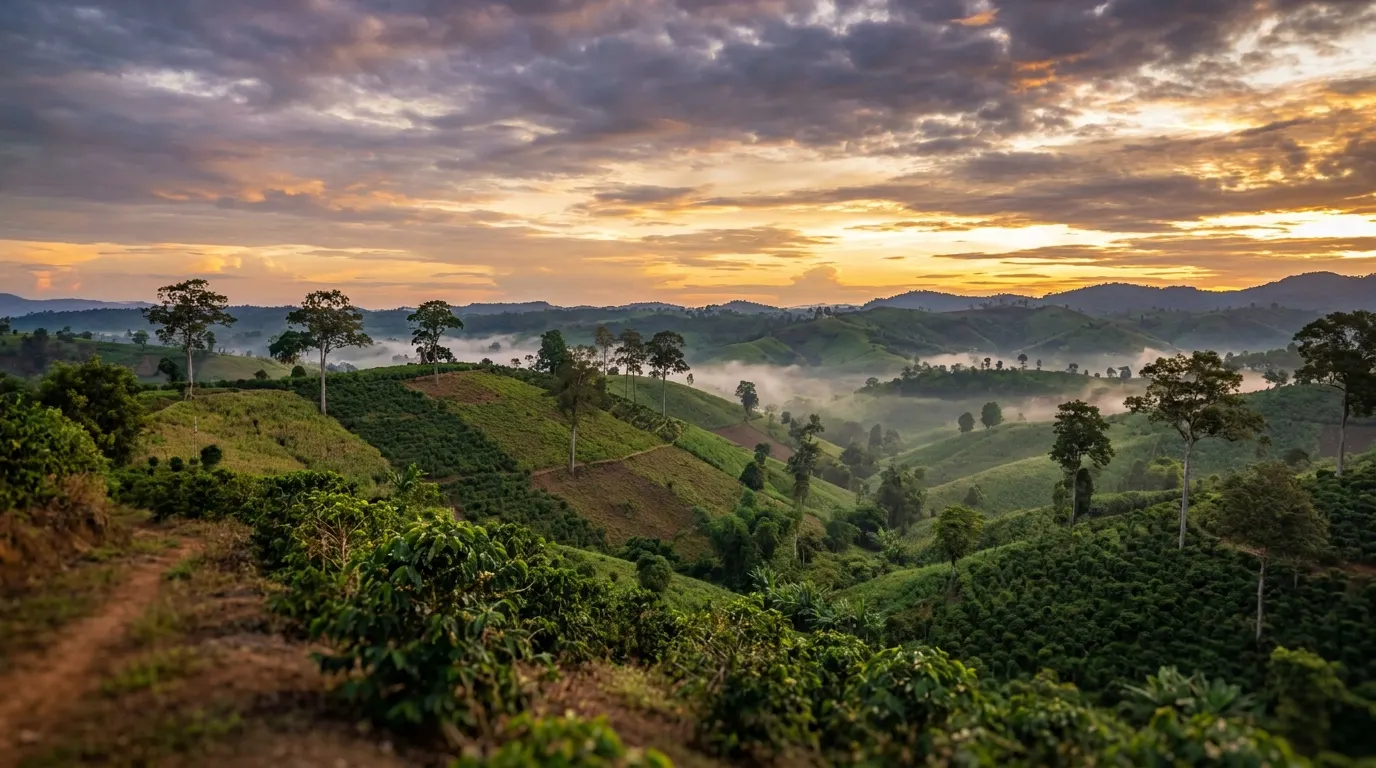
The Bolaven Plateau enters this era with unusual assets: a broad elevated landmass (room to shift within the plateau rather than off it), entrenched shade-growing tradition, volcanic soils that buffer drought, and — decisively — a dual-species economy where high-altitude Fine Robusta is already a proven premium product rather than a reluctant fallback. Our replanting programs with farmer partners lean into all four: shade densification, drought-tolerant varieties like Marsellesa alongside Catimor, and washed Robusta as a first-class citizen.
For buyers, the portfolio logic writes itself: origins and suppliers investing visibly in adaptation are the ones whose coffee will still be on offer sheets in 2040. Climate questions belong in sourcing due diligence now — ask us ours, and expect real answers.