Every origin speaks its own grading dialect: Kenya's AA, Colombia's Supremo, Ethiopia's G1, Guatemala's SHB, Vietnam's G2 Screen 16. To a newcomer the labels look like quality rankings. They are mostly not — they are physical descriptions, each measuring something specific, and knowing what each system actually measures is the difference between reading an offer sheet and being read by one.
Screen Size: The Universal Ruler
The most common grading dimension is simply bean size, measured by perforated screens numbered in 64ths of an inch: screen 18 beans are 18/64" across. Kenya's AA means screen 17–18; Colombia's Supremo means 17+; Excelso 14–16. Size matters for roasting uniformity — a mixed-size lot roasts unevenly — and correlates loosely with density and altitude, but a big bean from a mediocre farm cups worse than a small bean from a great one. Ethiopia's tiny landrace beans, among the finest coffees on earth, defeat size-based logic entirely.
Defect Counts: Where Grades Meet Quality
Defect grading counts flawed beans — black, sour, insect-damaged, broken, moldy — in a standard sample, usually 300 g. Ethiopia's G1 versus G2, Brazil's NY 2/4 nomenclature, and the SCA's specialty standard (a maximum of 5 'full defects' with zero category-one defects) all live here. Unlike size, defect counts genuinely predict cup risk: a single black bean can taint a brew, so low counts protect every cup you sell.
Altitude grades form a third family: Guatemala's SHB (Strictly Hard Bean) and Honduras's SHG (Strictly High Grown) certify growing elevation — 'hard' referring to the denser bean structure that cool, slow highland maturation produces. They are honest proxies with the same caveat as size: proxies, not scores.
Reading an Offer Sheet Like a Buyer
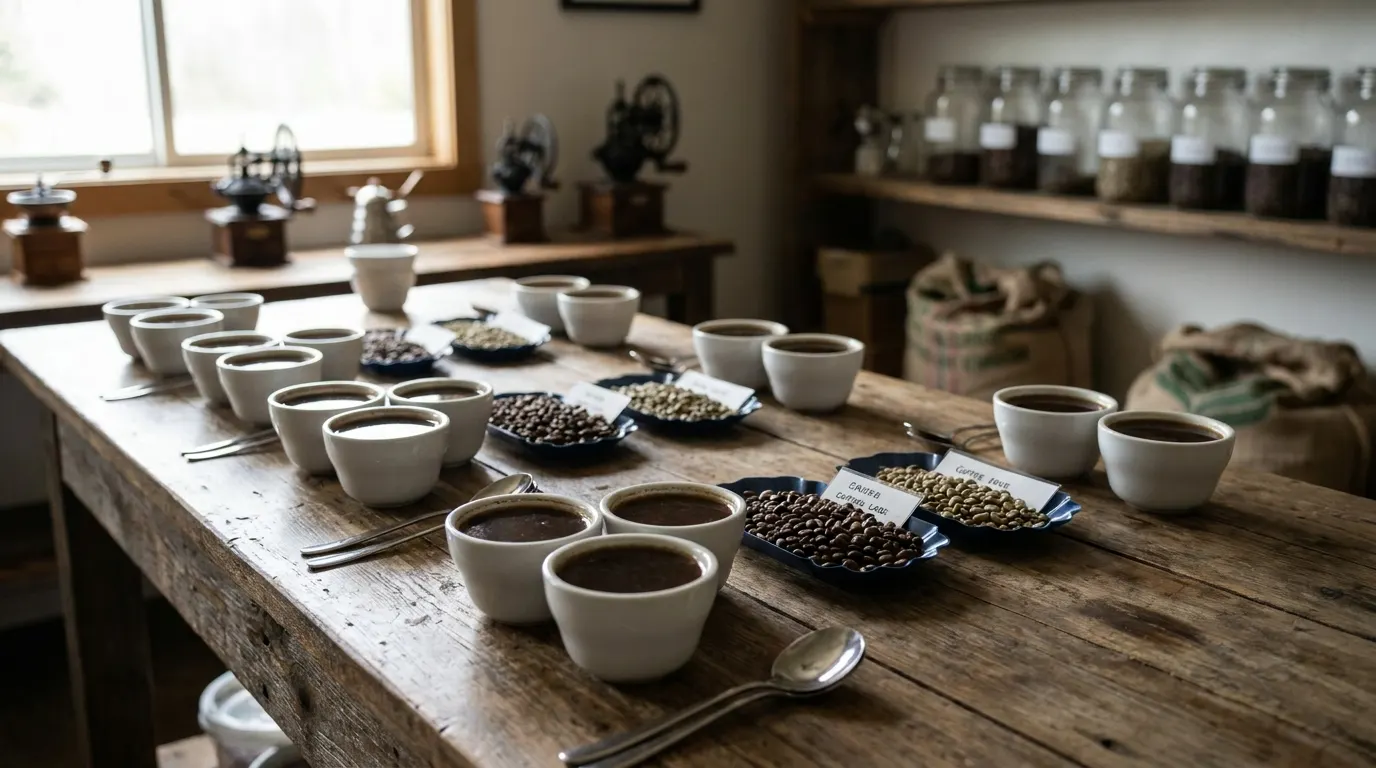
A professional offer specifies the full stack: screen size and tolerance, defect maximum, moisture and water activity, processing, crop year — and, decisively, a cup score or profile from an actual cupping. The physical grades tell you what the coffee is; only cupping tells you what it tastes like. Any offer leading with grades but silent on cup deserves the question: what does it score, and who scored it?
Volcana lots ship against written specifications covering every line above, with SGS independently verifying the physical parameters and cupping notes accompanying every sample. Grades are the skeleton of a coffee contract. The cup is its heartbeat — insist on both.