'Notes of blackcurrant, jasmine, and brown sugar.' To skeptics, coffee tasting notes read like sommelier theater. They're not — they're a standardized vocabulary describing real chemistry, organized by a research-built tool called the flavor wheel. Nobody added blueberries to your Ethiopian natural; specific fermentation compounds simply share molecules with blueberry aroma, and trained palates learn to name the resemblance.
Where Flavors Actually Come From
Every note traces to a source. Variety sets potential: Geisha's jasmine, SL28's blackcurrant. Terroir shapes it: volcanic soils feeding sweetness, altitude sharpening acids. Processing amplifies or cleans: naturals pushing berry and wine, washed lots revealing florals and citrus. Roasting translates: Maillard chemistry building caramel and chocolate, development time deciding how much origin survives. A tasting note is a fingerprint of those decisions.
The acid family illustrates it neatly: citric acid (literally the lemon acid) reads as citrus brightness; malic acid (the apple acid) as red apple — the signature of our own Bolaven cups; phosphoric acid as Kenya's cola sparkle; and fermentation-derived lactic acid as creamy yogurt softness.
Reading the Wheel
The SCA/WCR flavor wheel arranges flavors from general (center) to specific (rim): Fruity → Berry → Blueberry. That structure is the training method — beginners work the inner ring ('is this fruity, nutty, or roasted?'), experienced tasters chase the rim. Nobody jumps to 'dried longan' on day one, and the wheel never asks you to.
Behind the wheel sits the World Coffee Research sensory lexicon, which anchors each term to a physical reference standard — meaning two trained cuppers in different countries saying 'brown sugar' mean the same measurable thing. It's the difference between poetry and a protocol.
Training Your Own Palate
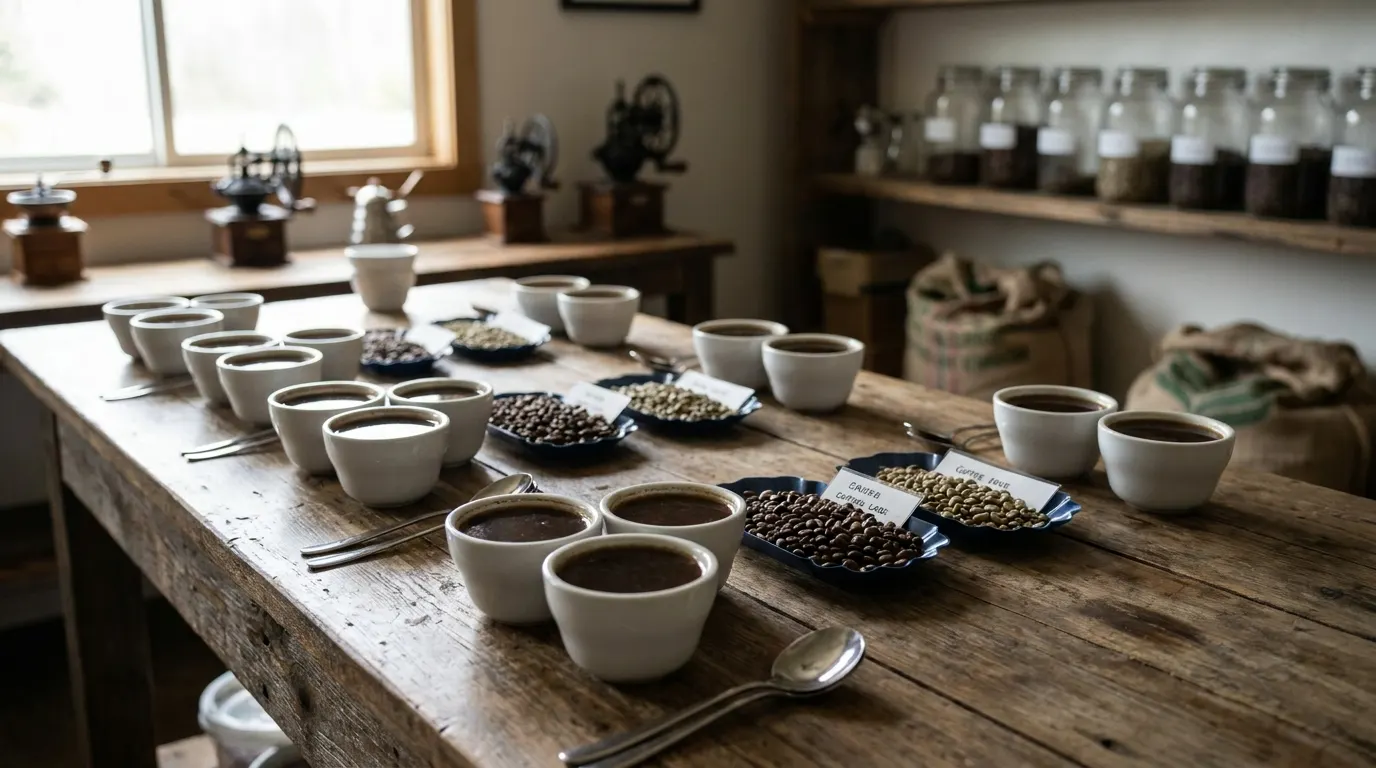
Taste comparatively: two coffees side by side reveal more than twenty tasted alone. Taste the references themselves — an actual red apple before cupping a Bolaven washed lot recalibrates you instantly. Write notes before reading anyone else's, then compare; the gap is your training signal. And smell everything, everywhere — the olfactory memory bank is what cupping withdraws from.
Buyers shouldn't fear the vocabulary; they should use it functionally. When our offer sheet says red apple, caramel, milk chocolate, that's a prediction you can verify in your own lab — and calibrated language between buyer and exporter is, quietly, a quality-control system all by itself.