Every cup of coffee is the sum of hundreds of small decisions made between tree and port. On the Bolaven Plateau, we control those decisions end to end — from the moment a picker's hand closes around a cherry to the moment an SGS inspector seals a container in Pakse. This is what that journey actually looks like, season after season.
Picking: Ripeness Is Everything
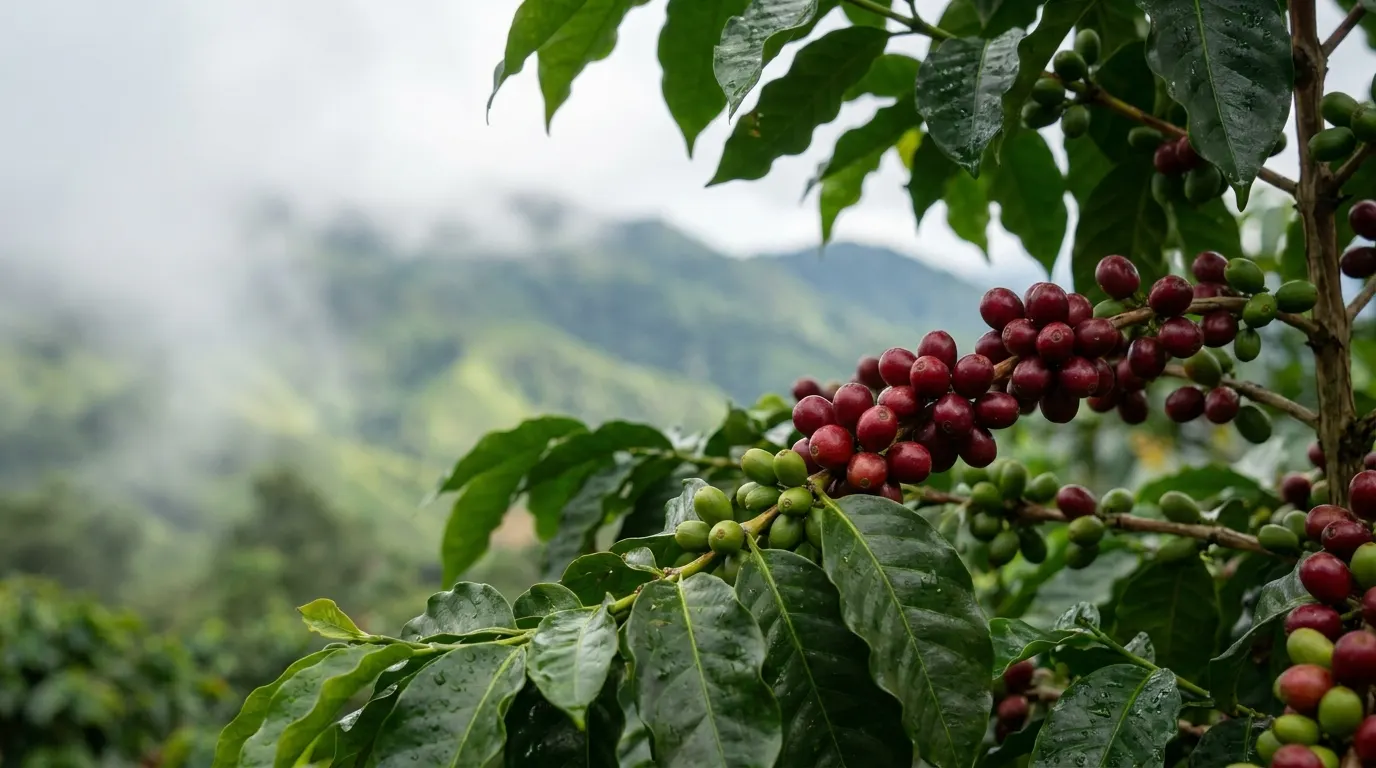
Quality begins with a color. Coffee cherries on a single branch ripen unevenly, so our farmer partners pick selectively — only deep-red, fully ripe cherries — returning to the same trees several times across the harvest from October to February. An underripe cherry carries less sugar and more astringency; an overripe one risks ferment taints. Neither belongs in a specialty lot.
Pickers are paid in a way that rewards ripeness rather than raw volume, which aligns everyone's incentives with the cup. It is slower and costs more than strip-picking. It is also the single largest quality decision in the entire chain.
Sorting and Flotation
Cherries reach the wet mill within hours of picking. The first checkpoint is a flotation tank: dense, healthy cherries sink, while underripes, insect-damaged fruit, and debris float off. Hand-sorting on tables catches what water misses. Only then does processing truly begin.
Processing: Washed, Natural, Honey
Most of our production is fully washed. Cherries are pulped the same day, fermented in clean tanks for 24–36 hours depending on ambient temperature, washed in channels, and graded by density. Washed processing demands more infrastructure and water than any other method, but it delivers the transparency and consistency our roasting clients build blends around.
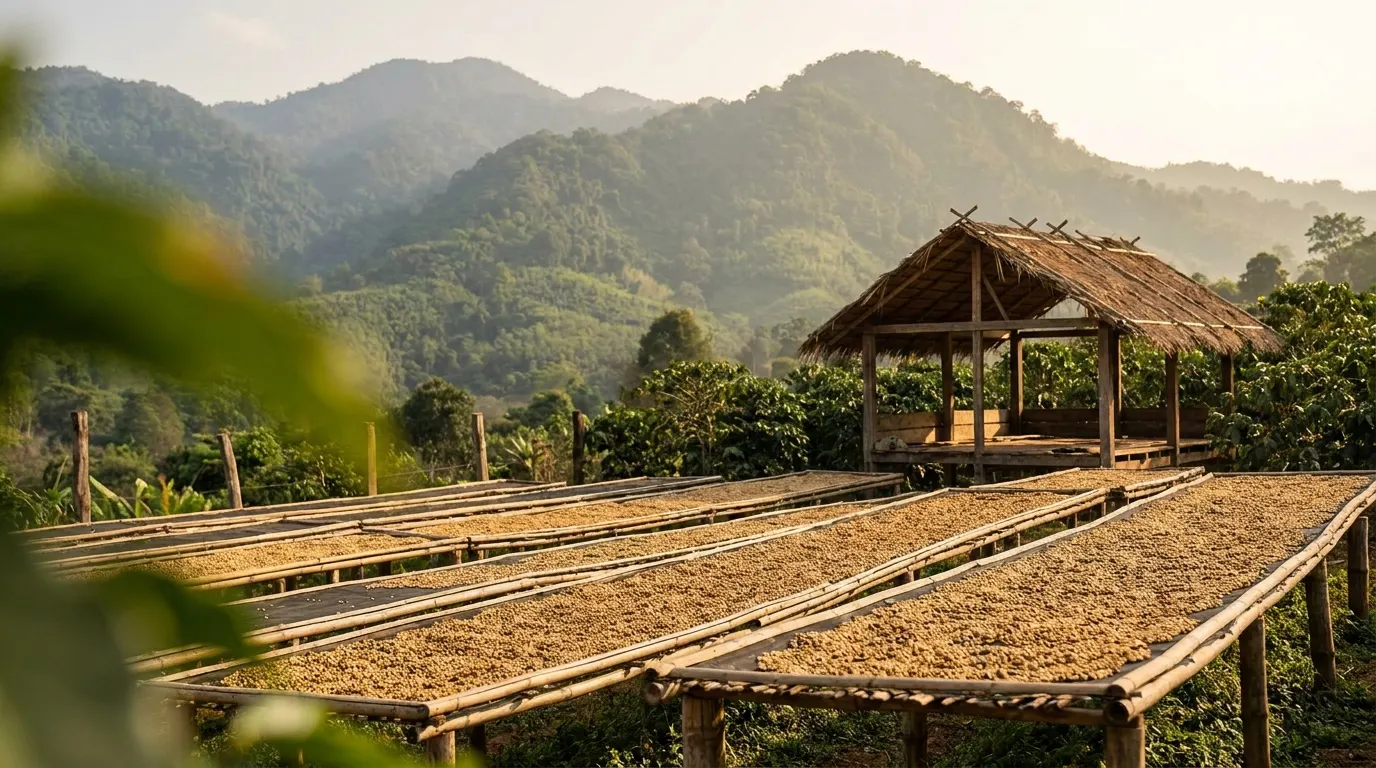
Natural and honey lots follow their own paths — whole cherries or mucilage-coated parchment dried slowly and turned constantly — and small anaerobic experiments run each season in sealed tanks with logged temperature and pH. Every method ends at the same place: raised drying beds under the plateau's dry-season sun, where coffee comes down slowly to 10–12% moisture over one to four weeks.
Resting, Milling, and Grading
Dried parchment rests in a cool warehouse for at least a month — a step invisible to consumers but essential for moisture stabilization and flavor settling. Milling then strips the parchment, and the green beans run through screens for size, density tables for weight, and hand-picking lines for the final defect sweep.
Each export lot is built to a written specification: screen size, moisture, water activity, and maximum defect count. Those numbers are verified independently — SGS inspects every lot we ship, and their report travels with the documents so a buyer in Hamburg or Melbourne sees exactly what left Pakse.
Cupping and the Container
Before any lot is offered, it is roasted and cupped against our own standards — and cupped again before loading. Green coffee is packed in GrainPro-lined 60 kg bags, containers are inspected for cleanliness and dryness, and desiccants and kraft-paper lining protect against condensation on the ocean leg from Laem Chabang.
From a farmer's hillside to a roaster's dock, a Volcana lot passes through at least seven quality checkpoints. The result is not luck; it is process — and it is repeatable, which is what our buyers value most.