New roasters obsess over machines and neglect the decision that actually determines their margins and their menu: how they buy green coffee. Equipment depreciates predictably; sourcing compounds — good sourcing habits build quality, cash flow, and story simultaneously, while bad ones quietly strangle a roastery that never figures out why. Here is the playbook we wish every new roaster received.
Start with the Math
Work backward from sales: 20 kg of roasted coffee sold weekly means roughly 24 kg green (weight loss in roasting is 15–18%), or about 1.25 tonnes a year — twenty-one 60 kg bags. That number frames everything: at this scale you buy from importers' spot lists by the bag, not containers from origin. The crossover toward direct container buying (300 bags) typically arrives around 15–20 t of annual green usage, though shared containers and consolidators blur the line earlier.
Cash-flow rule of thumb: hold 8–12 weeks of green inventory — enough to buffer supply hiccups, little enough that your money isn't sleeping in sacks. Green coffee is your largest recurring cost; treat buying discipline as seriously as rent.
Build a Two-Layer Menu
Sustainable roasteries almost universally converge on the same architecture: a stable base (house espresso and a dependable filter blend from consistent, well-priced origins — 70–80% of volume) and a rotating top (single origins that create story, press, and repeat visits). The base pays the bills and demands supply reliability; the top builds the brand and tolerates experimentation.
Source them differently: base components on forward contracts or standing importer relationships that guarantee continuity; rotators from spot lists and origin-direct discoveries. The classic first-year error is running the whole menu on spot-list impulse buys — every month a scramble, no blend consistency, no price stability.
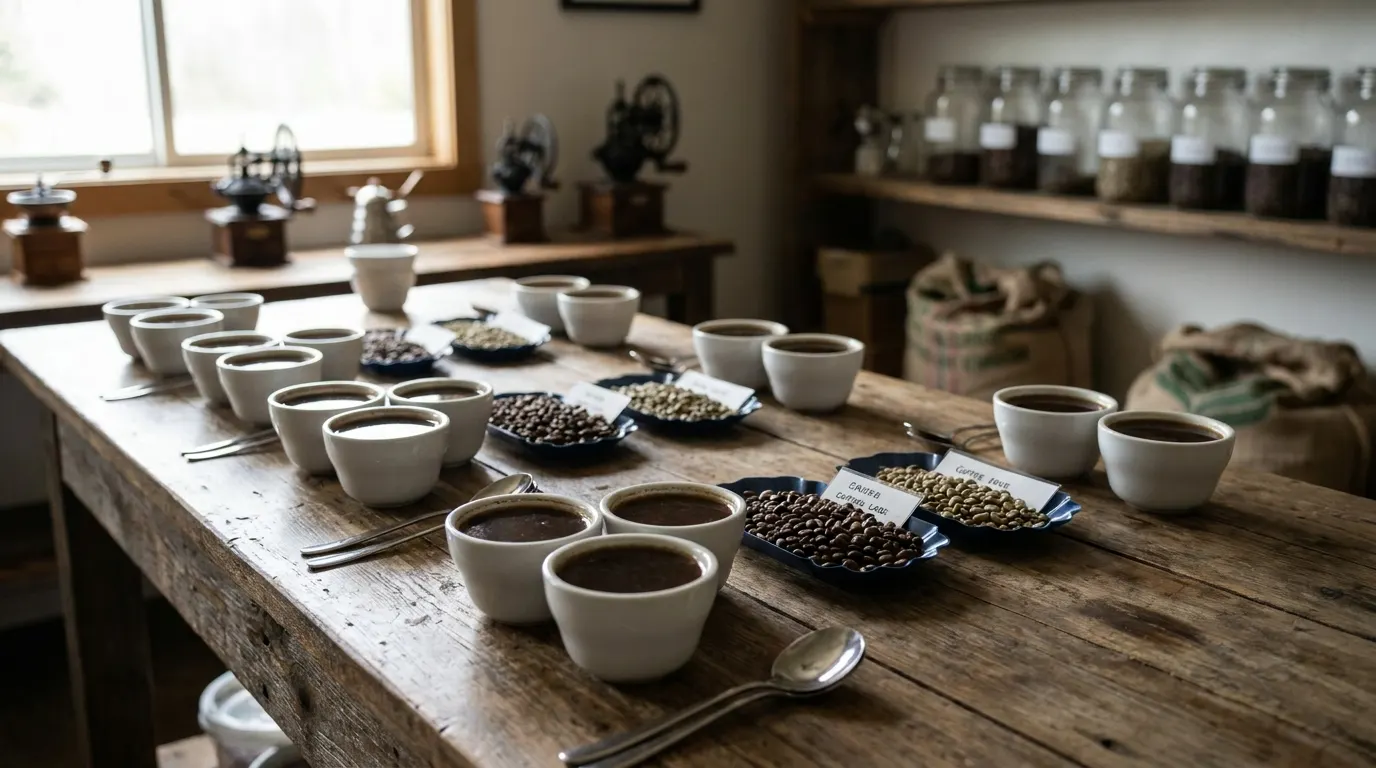
Importers, Direct Trade, and the Hybrid Path
Importers earn their margin: financing, warehousing, spot availability by the bag, and quality screening. Origin-direct buying earns its premium in story, price transparency, and differentiation — but demands volume, patience, and trust-building. The pragmatic path for growing roasteries is hybrid: importer relationships for the base, plus one or two direct origin relationships cultivated early, starting with samples and LCL pallet orders that grow toward container shares.
This is where an origin like ours fits a new roastery: Volcana ships samples free, sells from single bags via consolidated freight, and scales with you toward containers — with SGS-verified specs so you're never gambling on a stranger's cupping notes. The roasteries that thrive treat sourcing as a set of relationships compounding over years. Start one early; your third-year self will thank you.