Every coffee origin has a town where the crop concentrates — Colombia has Armenia, Ethiopia has Jimma. Laos has Paksong: a highland district capital at 1,300 meters on the Bolaven Plateau, where the air is ten degrees cooler than the Mekong valley below and nearly everything that happens, happens because of coffee.
A Town Built on Red Earth
Paksong sits at the plateau's heart, surrounded in every direction by smallholder coffee plots threaded between waterfalls — Tad Fane's twin hundred-meter falls are minutes away — and remnant forest. The French chose this area for their first plantations in the 1920s for the same reasons farmers stay today: deep basalt soil, reliable rain, and a climate that surprises first-time visitors with its cool mornings and occasional need for a jacket.
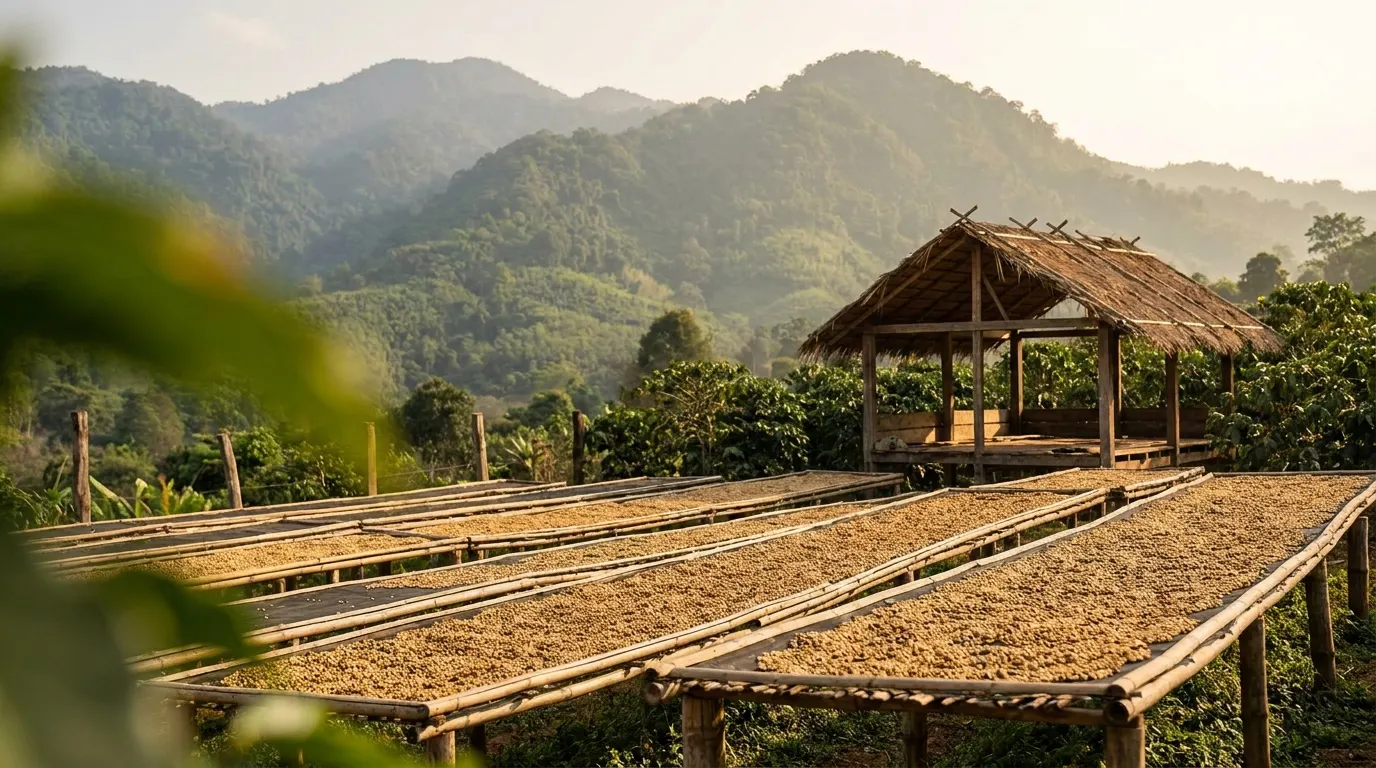
The town itself is functional rather than pretty — rebuilt after wartime destruction, organized around a market and a strip of agricultural suppliers, coffee traders, and increasingly, cafés run by young Lao roasters serving the crop grown within sight of their counters. During harvest, the streets belong to tak-tak tractors hauling cherry sacks, and the smell of drying coffee hangs over entire neighborhoods.
How the Coffee Moves
Paksong district and its neighbors — Thateng to the north, Laongam to the west — account for the overwhelming majority of Lao coffee production. The traditional flow ran through cherry collectors and dried-coffee traders to Pakse's exporters; the modern specialty flow, through washing stations that buy fresh cherry directly from farm families, process centrally, and build traceable lots by village and day.
Both systems coexist in Paksong's economy, and the price board at the morning market — cherry rates, parchment rates, dried-natural rates — is the town's real newspaper. When world prices move, Paksong feels it within a day.
Visiting the Plateau
For coffee professionals, Paksong is one of Asia's most rewarding origin trips and among its easiest: fly to Pakse (via Bangkok or Vientiane), and the plateau begins forty minutes up Route 16 — farms, stations, and waterfalls stacked along a single scenic road. Harvest season, November through February, is the time: picking in the mornings, mills running by afternoon, and the kind of direct conversations with producers that reshape a buying program.
Volcana Coffee hosts buyer visits every harvest — farm walks in our partner villages, station tours, and cupping at source in Pakse. There is no substitute for tasting a lot a hundred meters from the beds where it dried; tell us your dates and we'll build the itinerary.