Ask a roaster to name Southeast Asian coffee origins and you will hear Vietnam, Indonesia, maybe Thailand or Myanmar. Laos — sitting directly between Vietnam and Thailand, growing coffee at higher average altitude than either — rarely makes the list. That gap between quality and recognition is the most interesting thing about Lao coffee today.
The Fundamentals Are Genuinely Excellent
Strip away the branding and compare fundamentals. The Bolaven Plateau offers volcanic basalt soil of the kind celebrated in Guatemala and Costa Rica; altitudes of 1,000–1,350 m, unusually high for Robusta and solidly in Arabica territory; average temperatures of 18–22°C; a distinct dry season aligned with harvest; and a century of coffee-growing tradition. Very few origins combine all five.
The proof is in blind cuppings. Washed Bolaven Arabica lots regularly score 83–86 SCA, and the plateau's washed Robusta cups cleaner than most commercial Arabica — earning Fine Robusta grades and genuine attention from espresso roasters who need crema and body without rubber and ash.
Why the World Hasn't Noticed (Yet)
History explains the anonymity. Laos is landlocked, so its coffee has always shipped through neighbors and often under their story. For decades, most Lao production was bought at the farm gate by regional traders, blended anonymously, and exported as generic Asian Robusta. No port, no auction, no origin brand — no recognition.
Scale plays a role too: at roughly half a million bags a year, Laos produces in a season what Vietnam produces in a few days. Importers build programs around origins that can fill containers reliably; only in the past decade have Lao washing stations and exporters — Volcana Coffee among them — built the processing and documentation infrastructure that container buyers require.
The Hidden-Origin Advantage
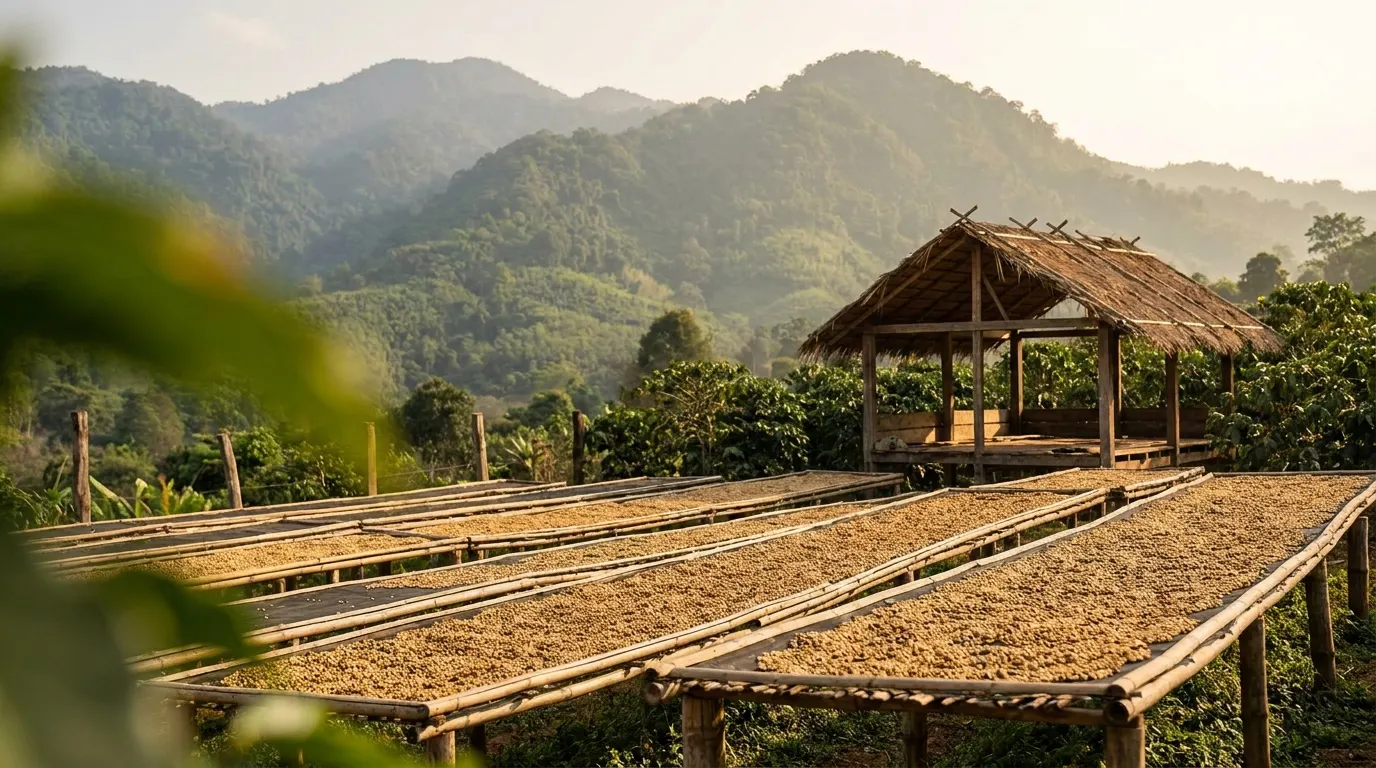
For buyers, obscurity is opportunity. Lao green coffee prices carry no fame premium: comparable cup quality from a celebrated origin costs meaningfully more. Roasters get a story no competitor on their high street is telling — a genuinely new origin conversation for customers who have seen every Ethiopian and Colombian label — and first-mover relationships with an origin whose quality trajectory points one direction.
The pattern is familiar. Rwanda was unknown to specialty in 2000. Myanmar was a curiosity in 2015. Origins break out when infrastructure meets terroir that was always there. On the Bolaven Plateau, that meeting is happening now — and the roasters who taste it early will be the ones who told the story first.